
A Visual Recap of GCT Romania 2026
Summarising the tournament in 10 graphs

Last week, there was the first classical event of this year’s Grand Chess Tour, with many top players participating. I was particularly interested in seeing how Sindarov would perform after his phenomenal Candidates performance.
Firouzja had to withdraw from the event due to an ankle injury. Since he played 5 of his 9 rounds, his results counted for the standings, while Keymer, van Foreest, So and Deac got a win without playing the game. I won’t include Firouzja in the graphs and only included the decisive games actually played in the tournament.
Scores
Keymer won the event, half a point ahead of Caruana. Below you can see how well the players scores with white and black.
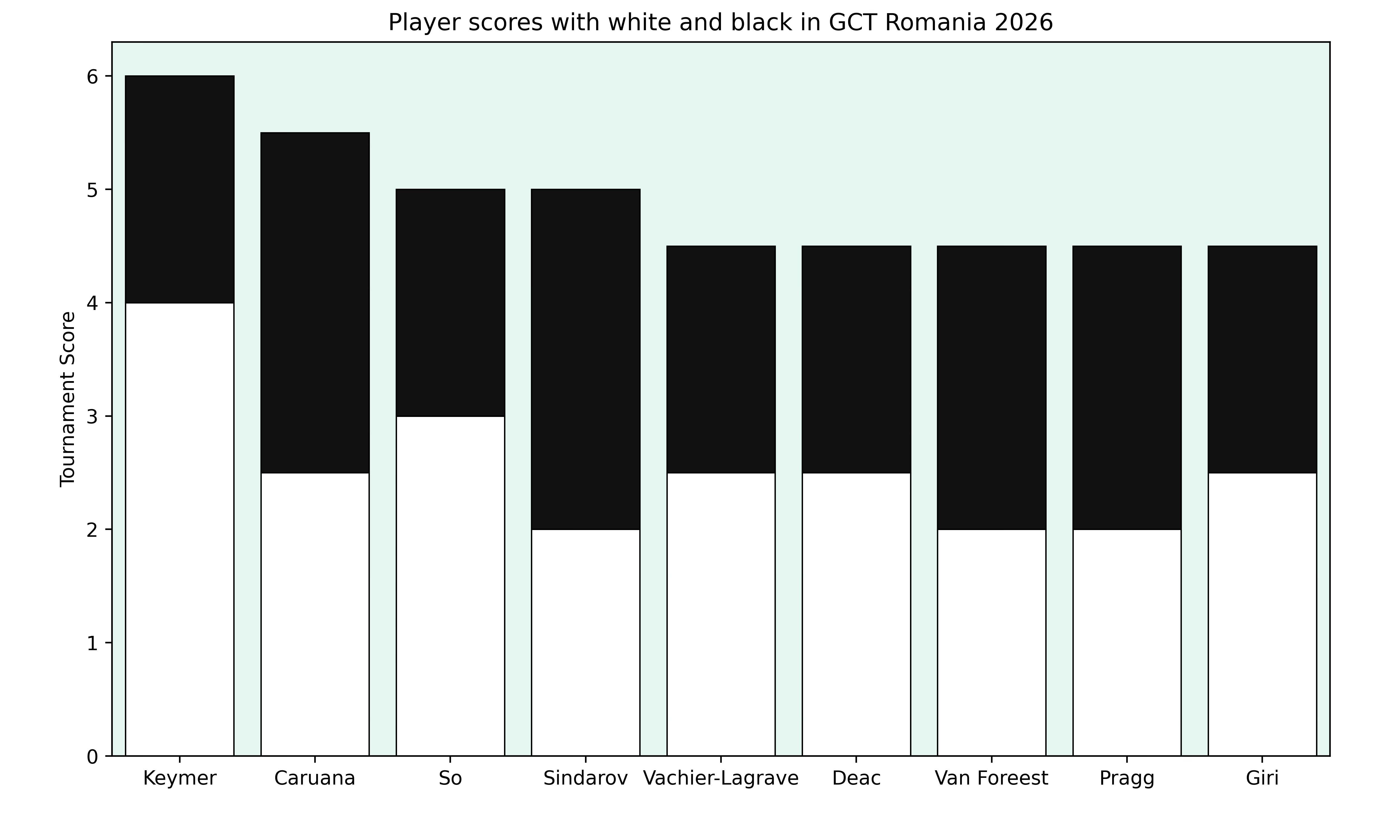
Keymer scored better with white than with black (although one of his white “wins” was against Firouzja), while Caruana scored more points with the black pieces. Most players have pretty even scores with both colours, which is part because of the somewhat low number of decisive games.
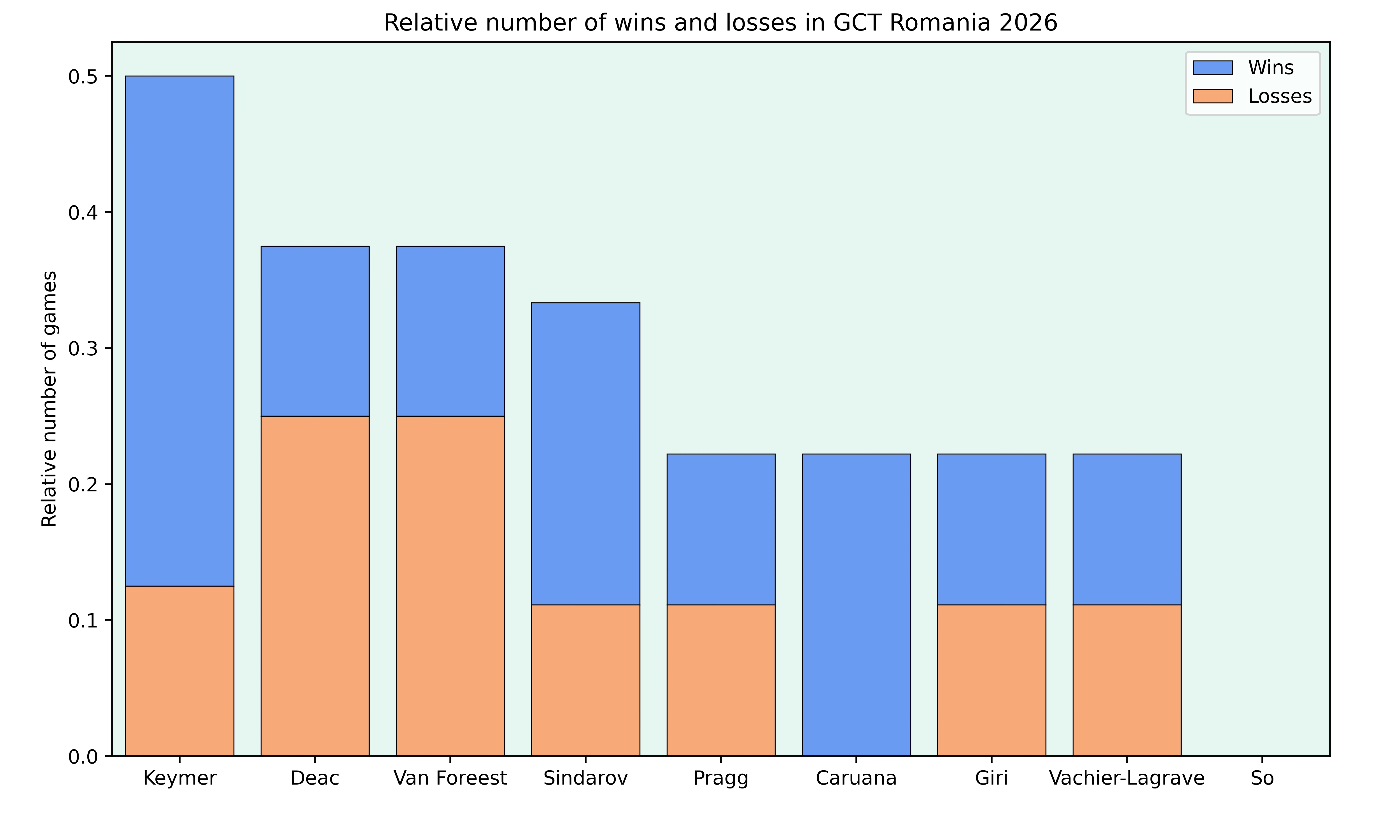
Keymer had the most decisive games (which was also the case in Wijk aan Zee this year). Overall, there weren’t too many decisive games, and Wesley So had none. But he ended up on +1 due to the point he got from Firouzja.
Time usage
One impressive part about Sindarov’s Candidates performance was his time usage. So I wanted to see if he took a similar approach in this tournament.
To do that, I looked at the median time advantage each player had over their opponents after every move.
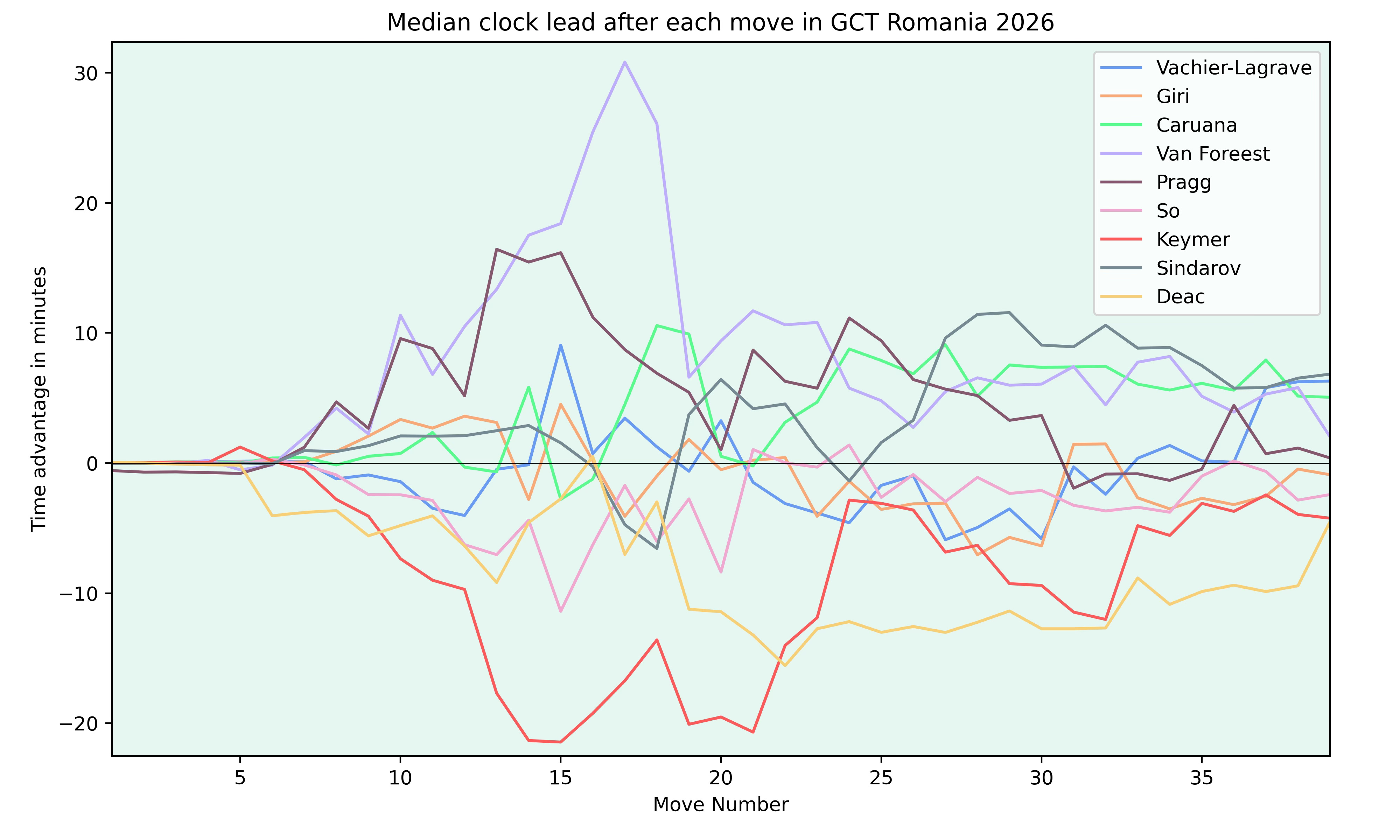
Sindarov didn’t gain the same time advantage out of the openings as in the Candidates, but he was still playing quickly in the middlegame and had a median time advantage of around 10 minutes after move 25.
Interestingly, Keymer got behind on the clock after the opening, which is the opposite of Sindarov’s time management in the Candidates (although the time control was 90+30 in Romania compared to 120 minutes for 40 moves in the Candidates).
Better and worse positions
Since the game results never tell the full story, I want to take a closer look at the performance of the players in their games.
To start off, I want to see how often each player had a much better position (engine evaluation greater than +1), a better position (evaluation between +0.5 and +1), an equal position (evaluation between -0.5 and +0.5), a worse position or a much worse position.
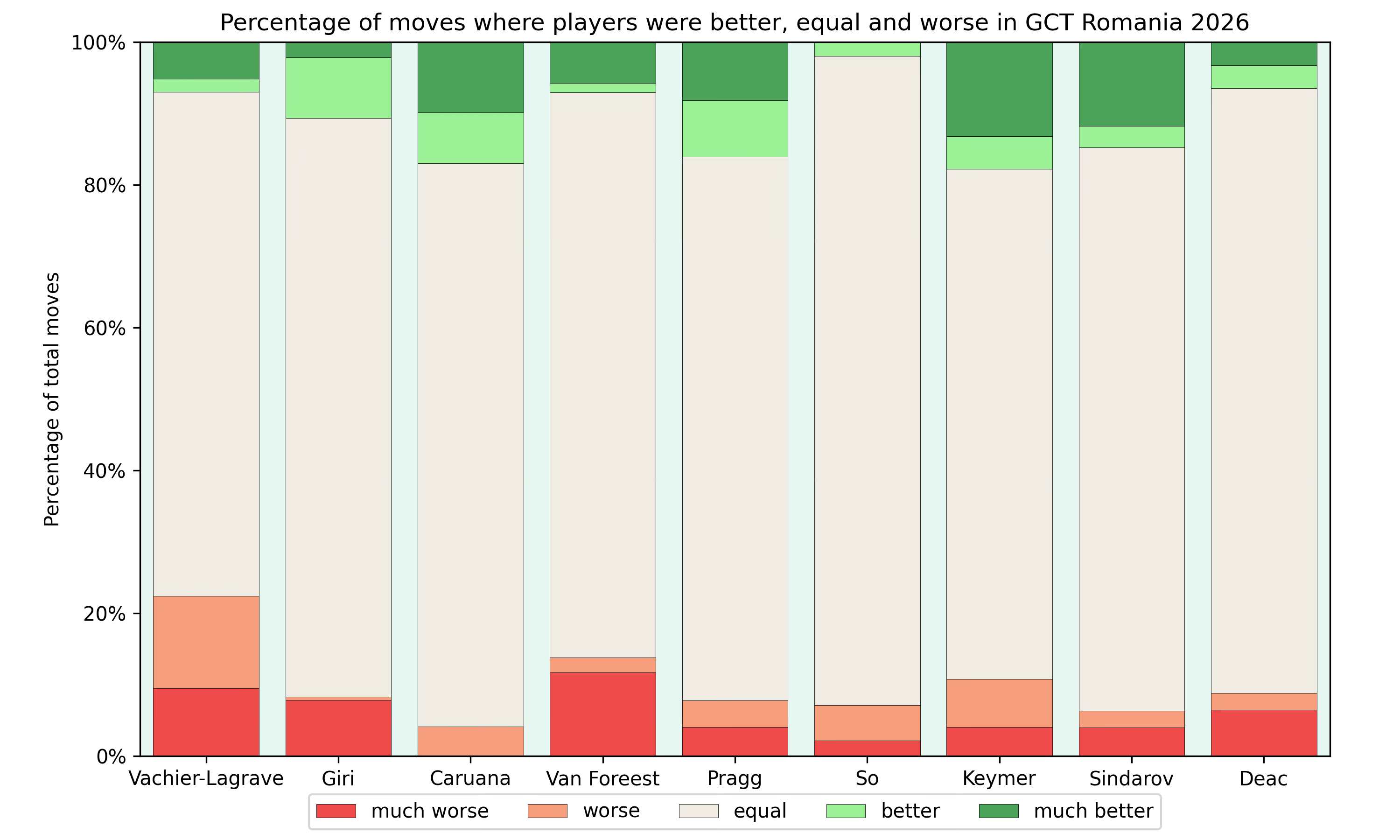
Caruana really stands out in this graph, as he never stood much worse in the whole tournament, which is really impressive. It’s also interesting to see that Sindarov had many very good positions, so he probably had some trouble converting his advantages.
To see if this was actually the case, we can look at the number of games where a player had an advantage of more than +1 compared to the number of wins.
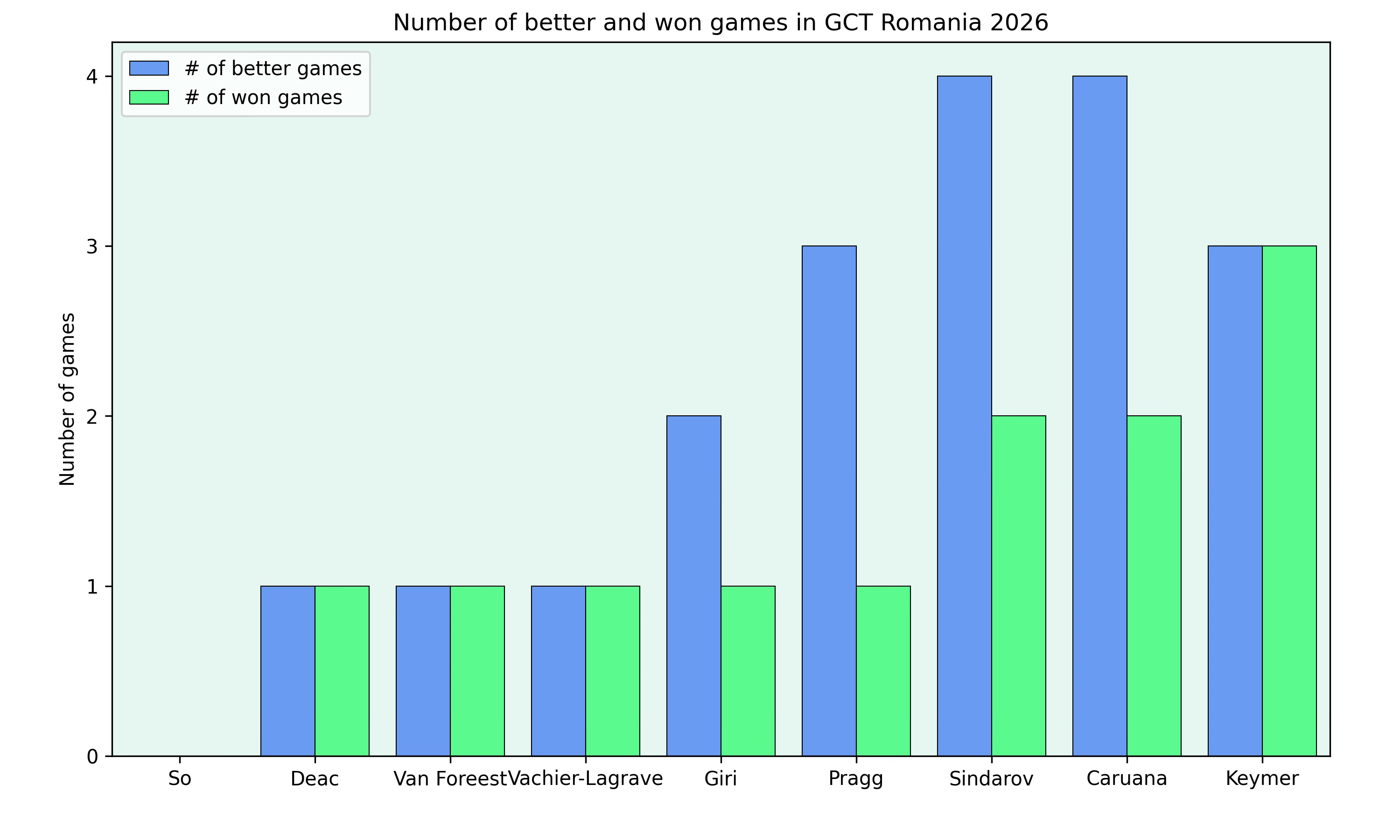
Both Caruana and Sindarov had big advantages in 4 games, but only converted 2 of these games into wins. In contrast, Keymer converted all chances he got and scored 3 wins, plus the full point he got for the game against Firouzja, which isn’t included here.
Most players didn’t reach too many good positions, which is the main reason for the somewhat low number of decisive games. Wesley So actually never had an advantage of +1 or more in the whole tournament.
We can also look at how well players managed to hold positions where they stood worse.
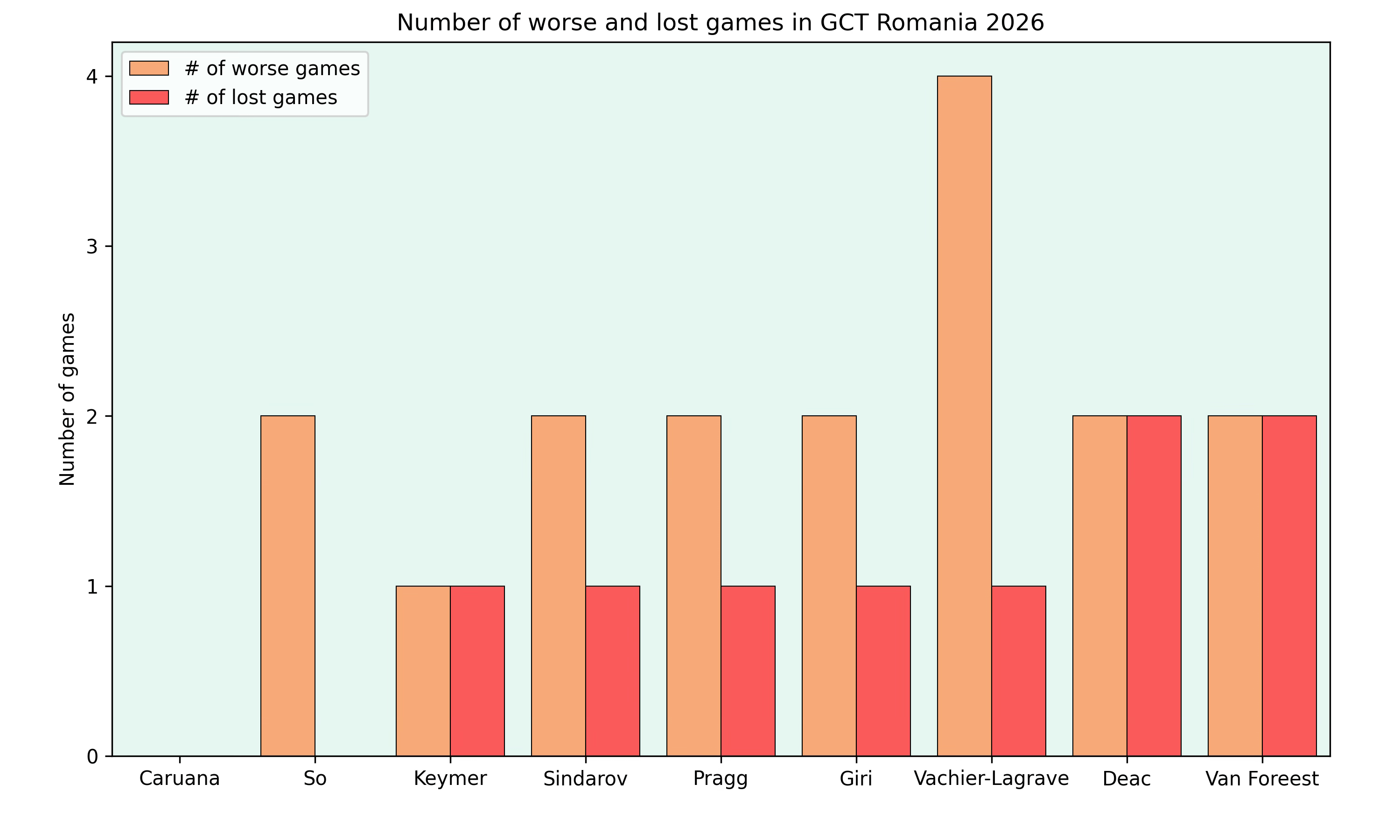
Again, we can see that Caruana never actually stood much worse, while So and Vachier-Lagrave managed to hold a couple of games where they were in trouble.
Engine analysis
Apart from looking at games where players were better or worse, we can also analyse the moves individually.
The first thing I want to look at here is the number of inaccuracies, mistakes and blunders by each player.
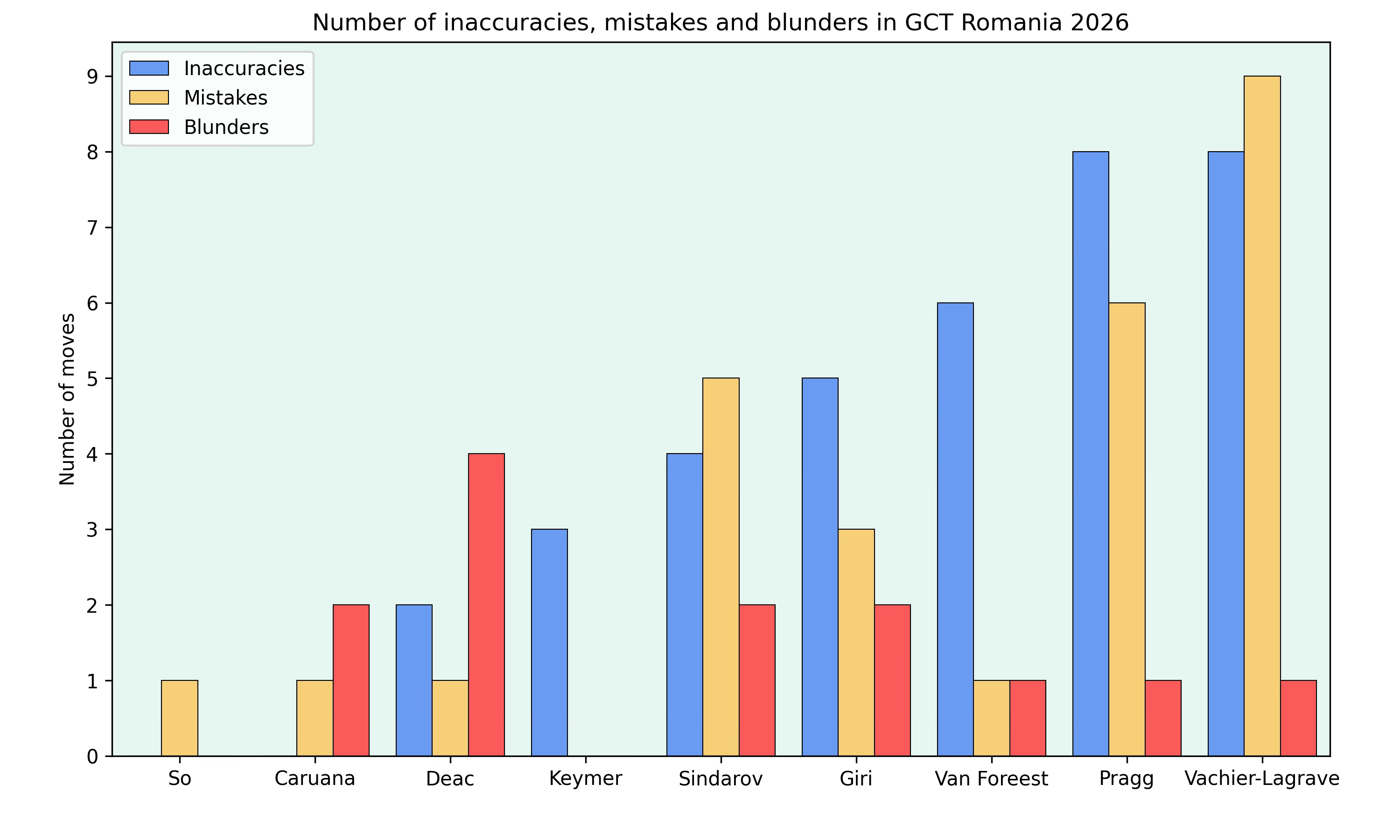
Overall there weren’t too many blunders in this tournament. One interesting detail is that in his loss, Keymer had 3 inaccuracies and no mistakes or blunders, so Caruana has actually more mistakes and blunders despite not losing a single game.
To get a more detailed view of how well the players played, I want to look at their accuracies and compare them to the accuracies of their opponents.
Note that I use my own accuracy metric, which was calibrated using OTB grandmaster games, so the numbers are a bit lower than what you may be used to.
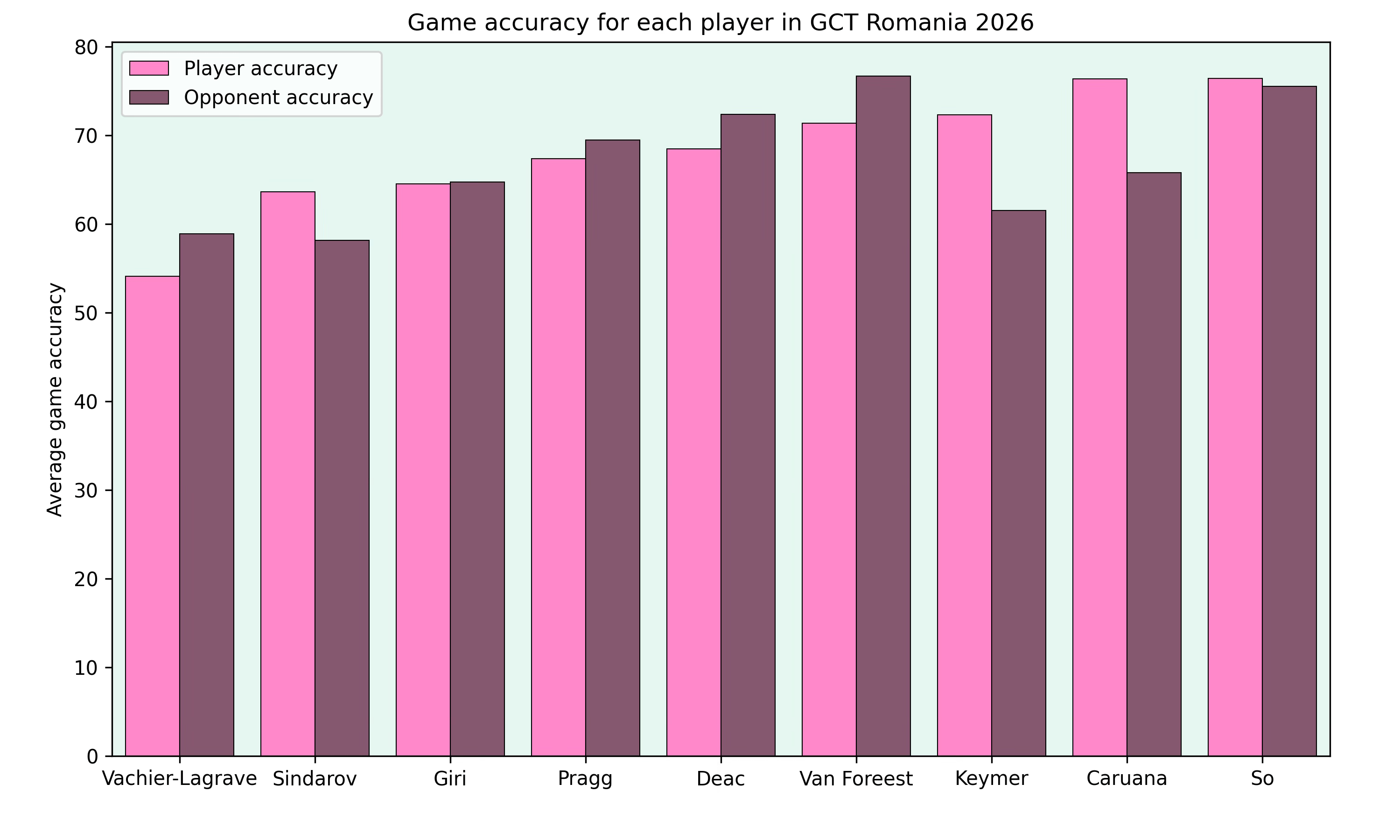
Once again, we see that the players at the top of the standings don’t necessarily have a super high accuracy compared to the field, but that they play much more accurately than their opponents.
Openings
Finally, I want to look at which first moves and openings were played in this event, especially since the openings in the Candidates were skewed towards 1.d4 and there were hardly any Spanish or Italian openings.
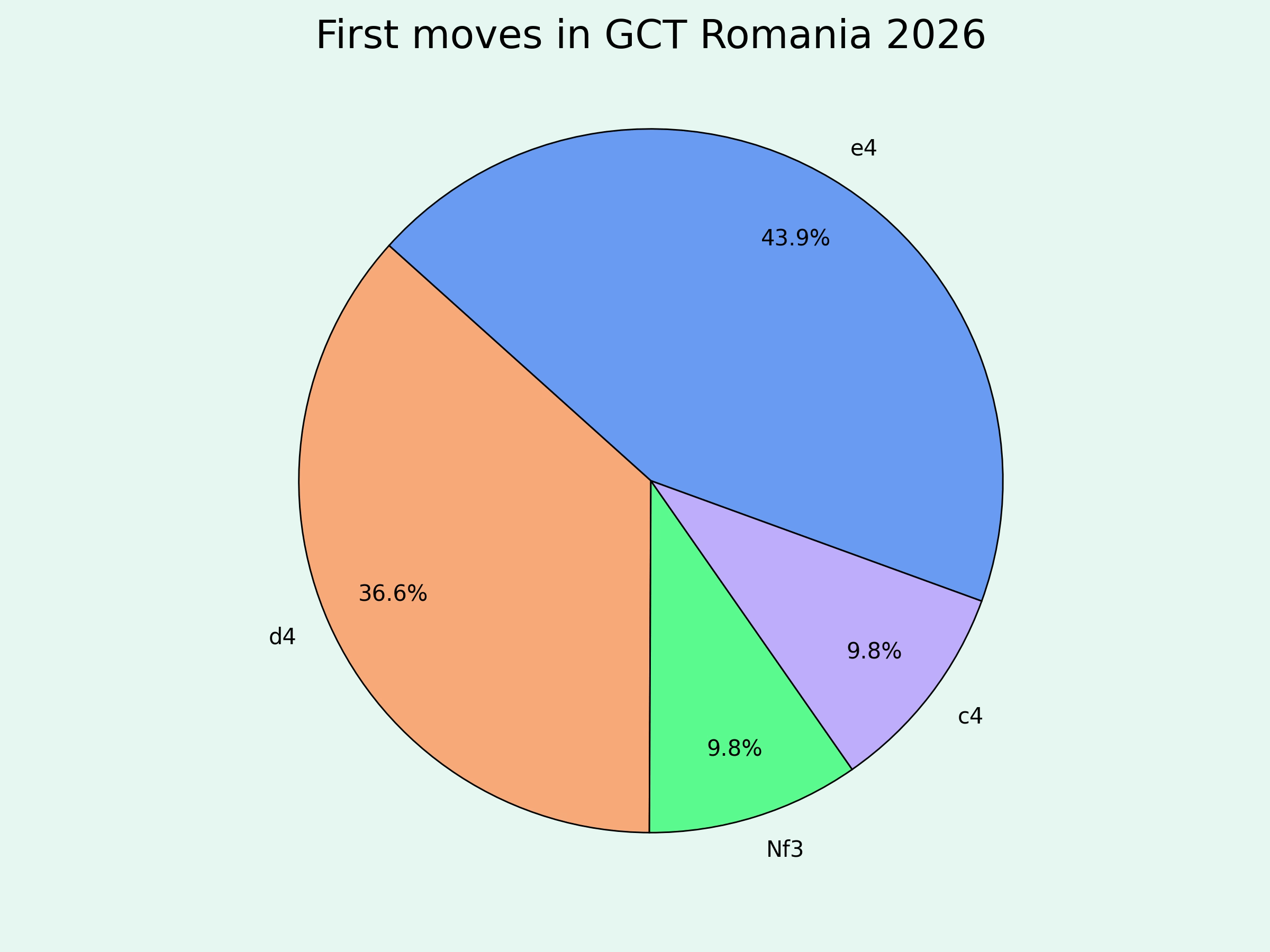
1.e4 was the most popular first move in Romania, probably also due to the fact that there weren’t any exclusive Petrov players in the field.
The actual openings played also showed more variety than in the Candidates.
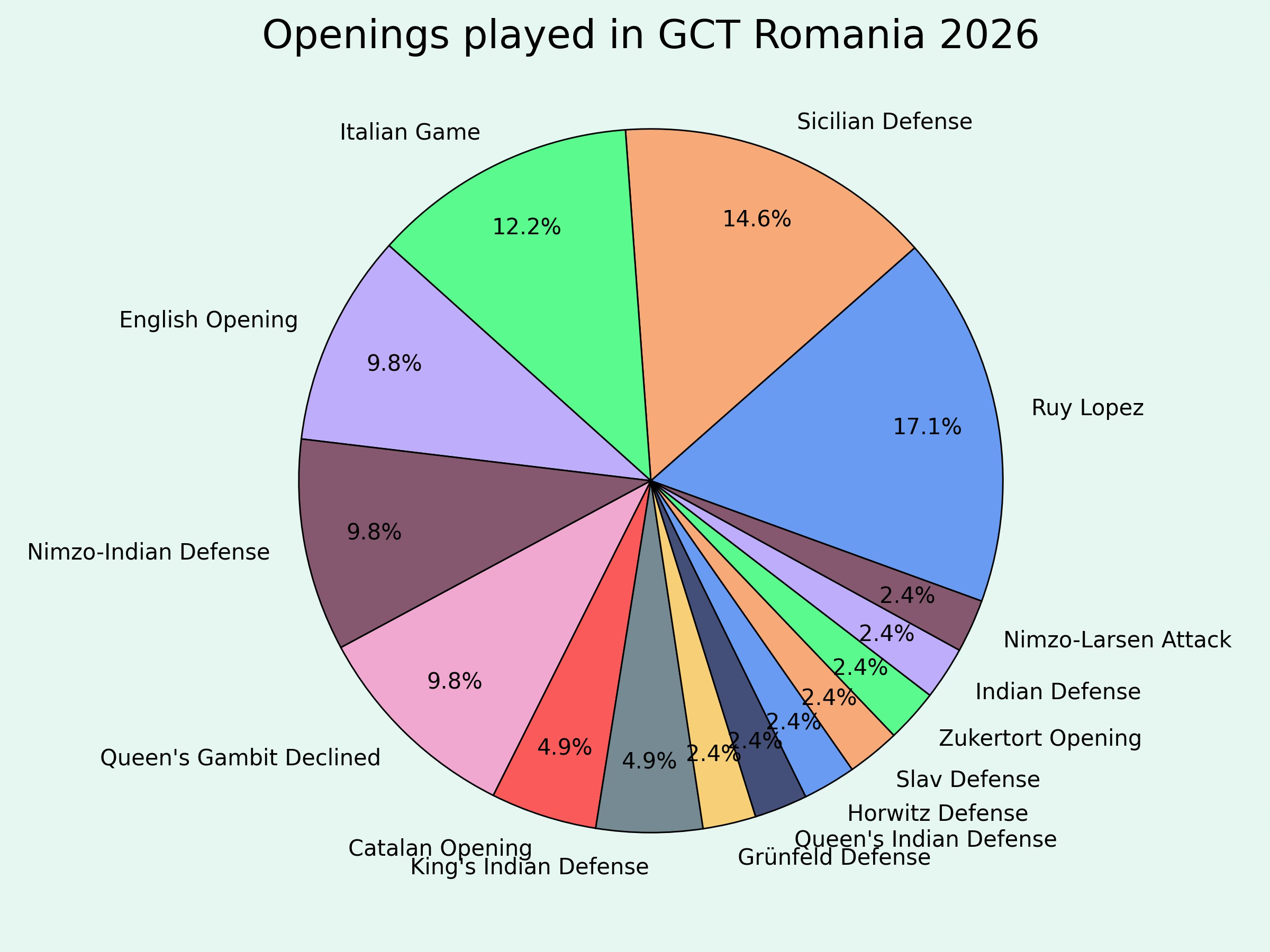
The Ruy Lopez was the most popular choice and while almost everyone in the Candidates answered 1.d4 with the QGD, there was much more variety here with the Nimzo-Indion and even a couple of King’s Indian Defenses.