
Visual Recap of the World Rapid Championship 2025
A visual overview of the open and women's sections of the tournament

The world rapid and blitz championships are the most exciting tournaments to follow for me, as there are so many games played in only a couple of days. The only disadvantage of the format is that it’s hard to keep track of everything that’s going on in the tournament.
So I want to focus on the bigger picture in this recap post. I’m covering the open and women’s section of the world rapid championship in this post and I’ll do a separate post for the blitz after that tournament is done.
Open section
Fight for first place
The fight for the world rapid title had some twists and turns, with Artemiev defeating Carlsen to gain the lead, only for Carlsen to fight back on the final day. Here is how the fight between the top 5 finishers played out over the course of the tournament.
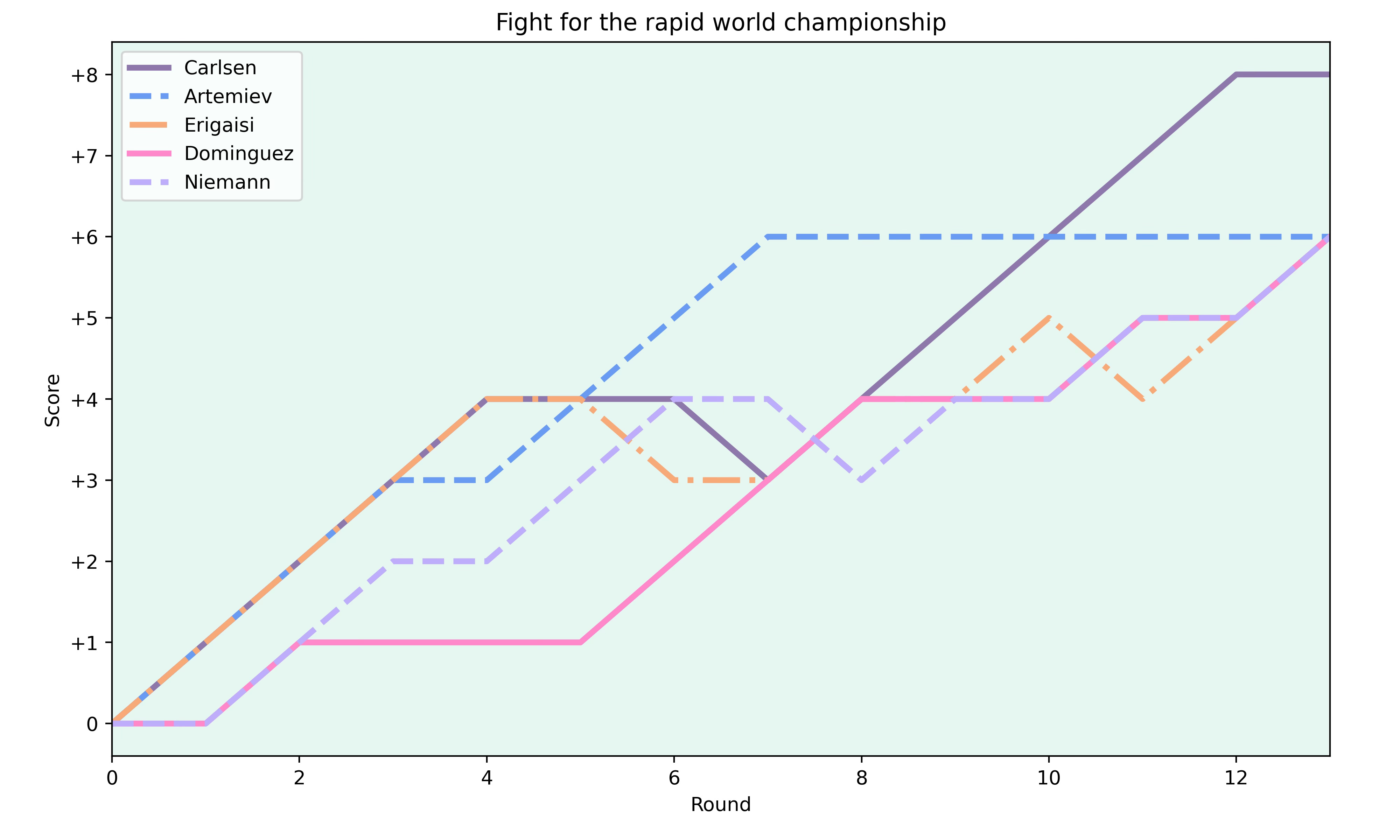
After defeating Carlsen in round 7, Artemiev was well clear of the other top finishers. However, he drew his remaining games, allowing Carlsen to overtake him by winning 6 games in a row and Dominguez, Erigaisi and Niemann caught up with Artemiev in the final round to share second place. Artemiev’s tactics worked out in the end, as he got second on tiebreaks, with Erigaisi getting third.
Dominguez’ path to the shared second place is particularly interesting, as he was only on +1 after 5 rounds, but then scored 7.5 out of 9 to finish shared second. However, due to his slow start, he had the worst tiebreak out of that group and missed out on a medal like Niemann.
Better and worse positions
To get an overview of what happened in the games, I like to look at the times where the players were standing better or worse.
I’ll focus on the players with at least 9 points in the tournament, to see if there are any differences between Carlsen, the group on 9.5 points and the players on 9 out of 13.
Firstly, I want to look at the relative number of moves where the players were much better (evaluation of more than +1), slightly better (evaluation between +0.5 and +1), equal (evaluation between -0.5 and +0.5), slightly worse and much worse.
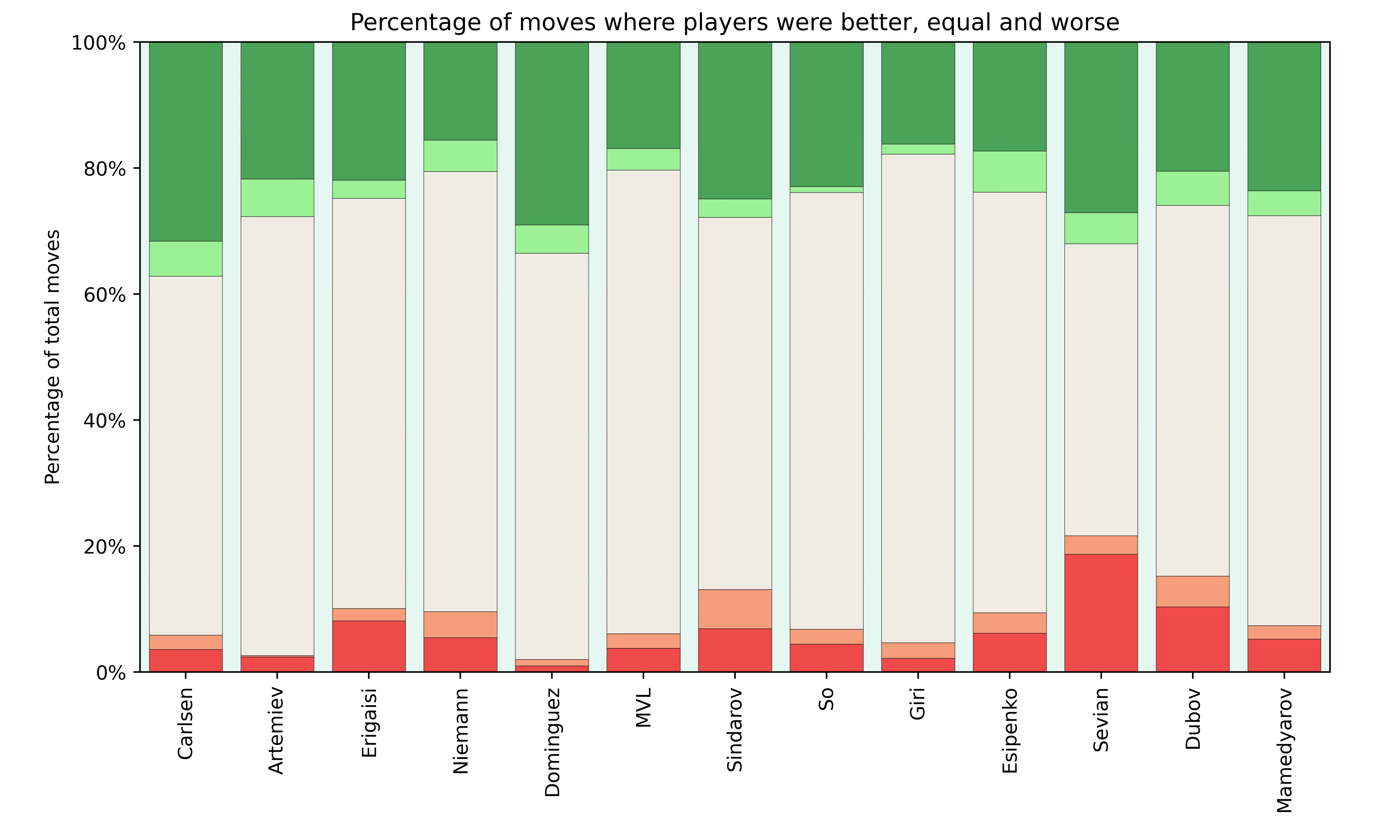
It’s interesting to see the differences between some players. Artemiev and Dominguez were hardly ever worse and both didn’t lose a game, but especially Artemiev didn’t get as many good positions as other players. Sevian on the other hand had a lot of positions where he was better but also many where he was worse, so it looks like he had some wild games.
Having a good position is of course only part of the story, what counts in the end are the number of games the players manage to convert. So let’s look at the number of games where a player was better compared to the number of their wins.
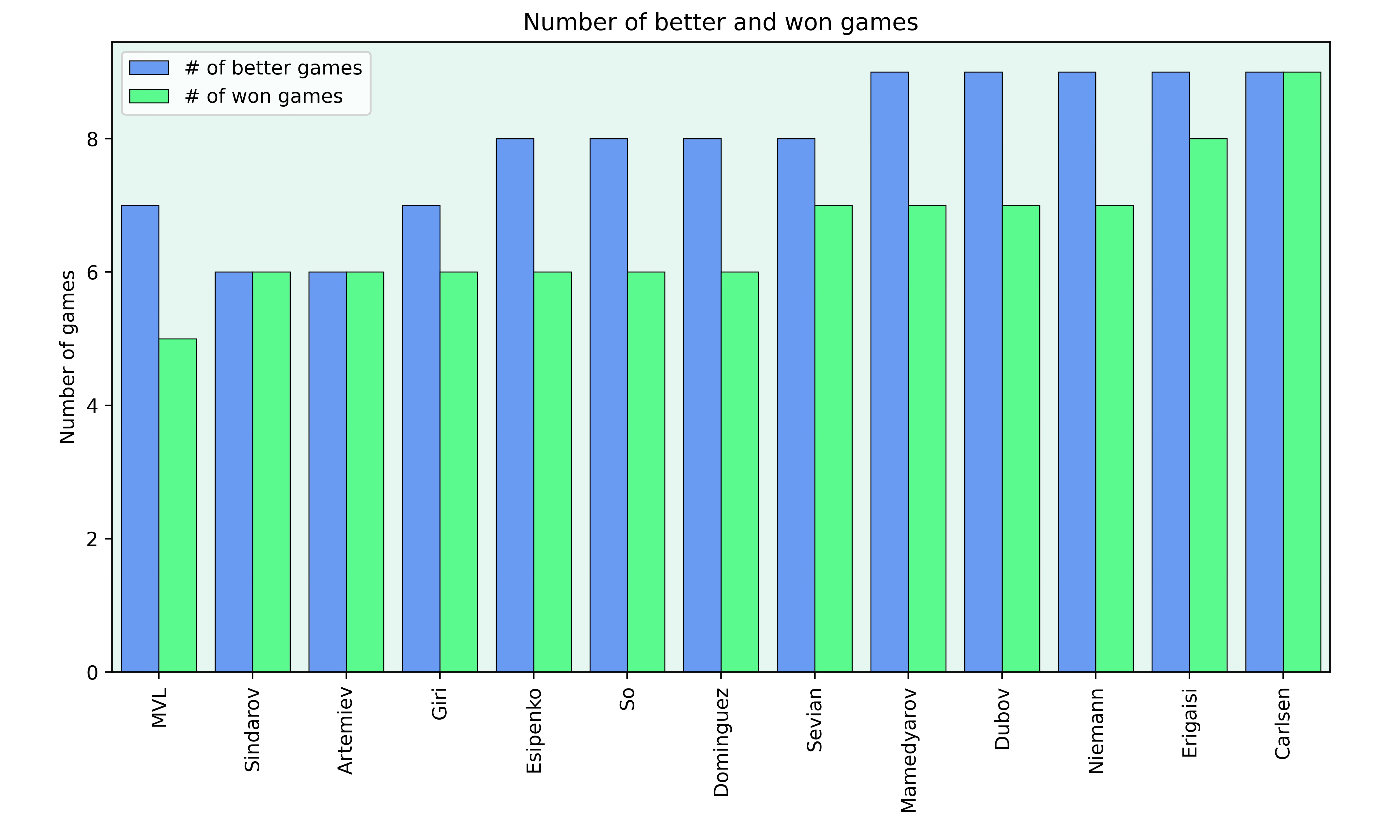
Artemiev, Sindarov and Carlsen all managed to convert all their advantages, but Carlsen got more games with advantageous positions, so he managed to win the title.
It looks like Niemann and Dominguez both missed some chances in multiple games that could’ve led to a medal for them.
We can also look at the games where the players were worse and see how often they actually lost the games.
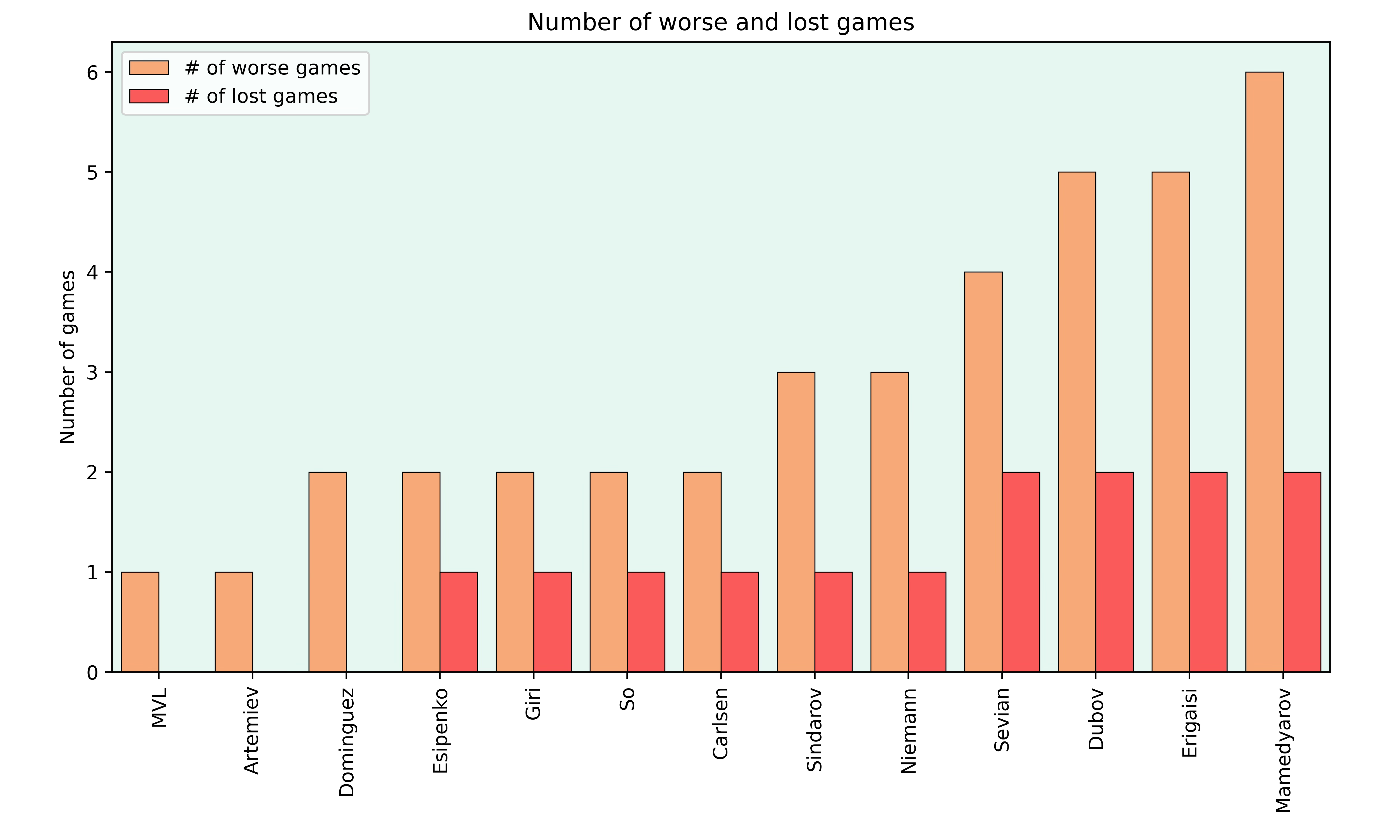
Amazingly, MVL and Artemiev were only worse in one game out of the 13 they played in the tournament and Dominguez also finished the tournament without a loss.
Dubov, Erigaisi and Mamedyarov often got into trouble, but they managed to save most of their worse games, to finish near to top of the standings.
Engine analysis
Finally, I want to look at how well the players played according to the engine.
The easiest thing to look at is the number of inaccuracies, mistakes and blunders by each player.
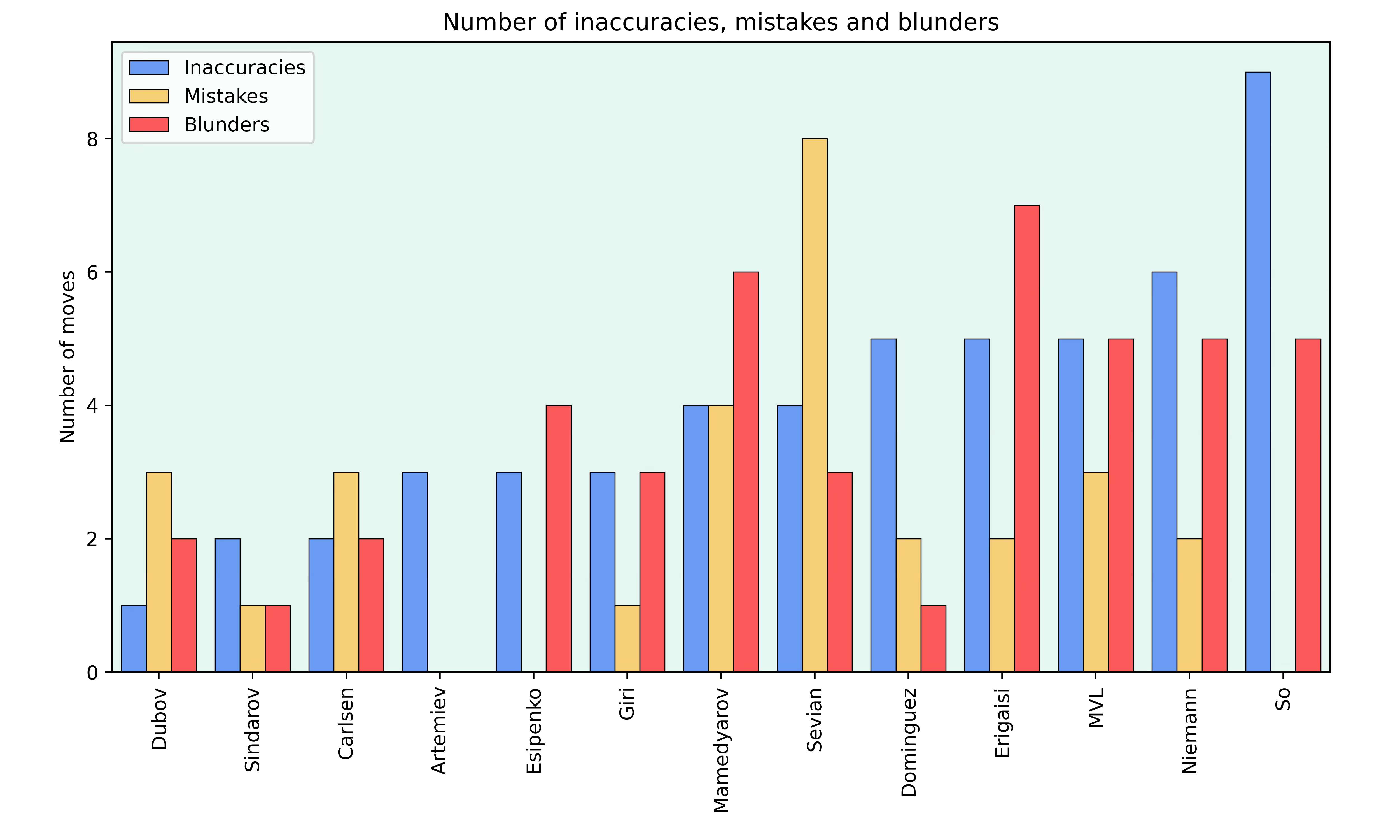
Once again, it looks like Artemiev played cautiously and well in all his games, having made no mistakes or blunders during the whole tournament.
Finally, I want to look at the accuracy of the players and their opponents. Note that I calculate the accuracy based on classical games by grandmasters, so the numbers are lower than on the online sites.
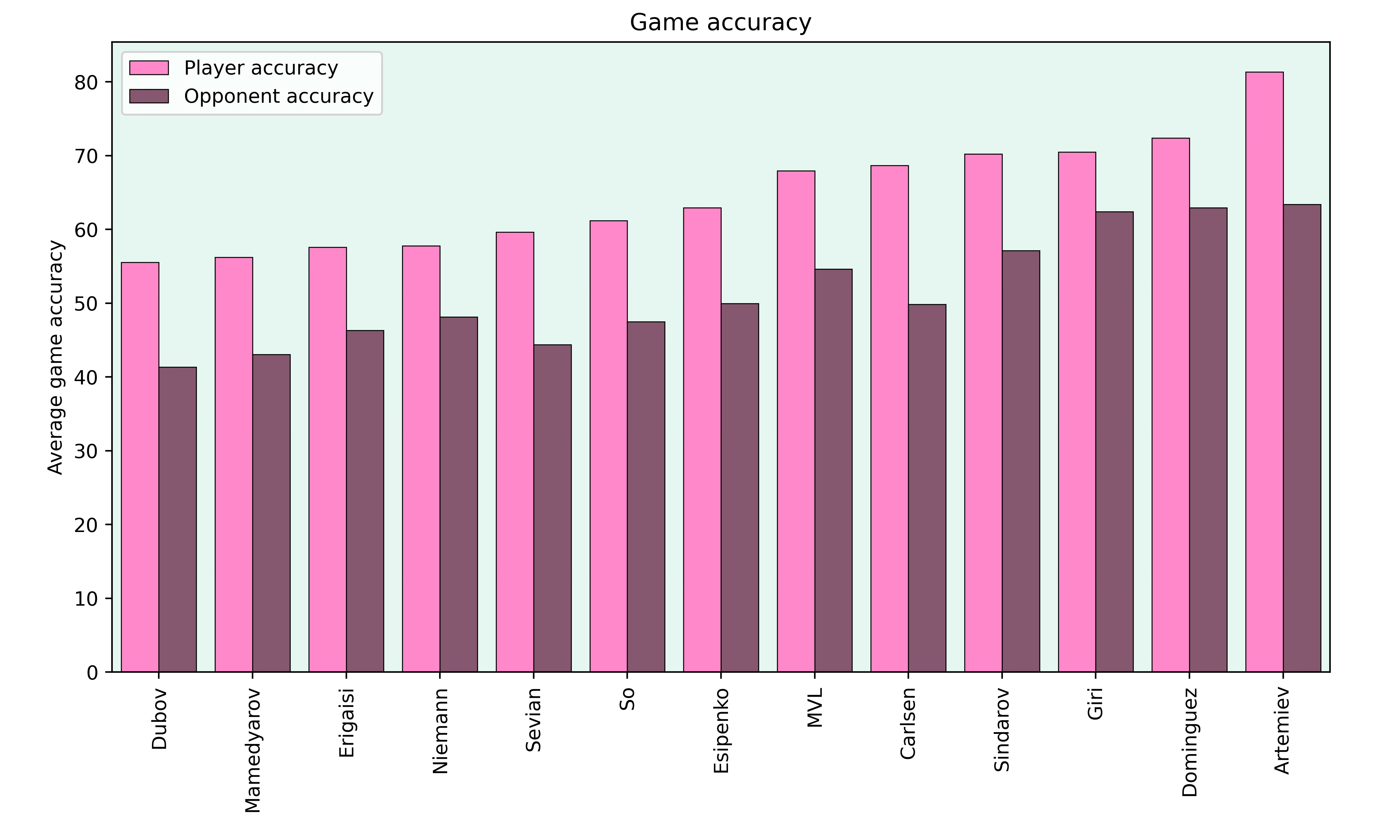
As one would expect based on everything we’ve seen before, Artemiev was the most accurate player, while players known for more complex and dynamic games had the lowest accuracies.
What stands out most to me is the gap between Carlsen’s accuracy and the accuracy of his opponents in their games. This usually means that Carlsen managed to pose problems to his opponents and navigate difficult positions well.
Women’s section
Fight for first
In contrast to the open section, no player managed to separate herself from the pack in the women’s section. Especially the fight for first was very tight throughout the tournament.
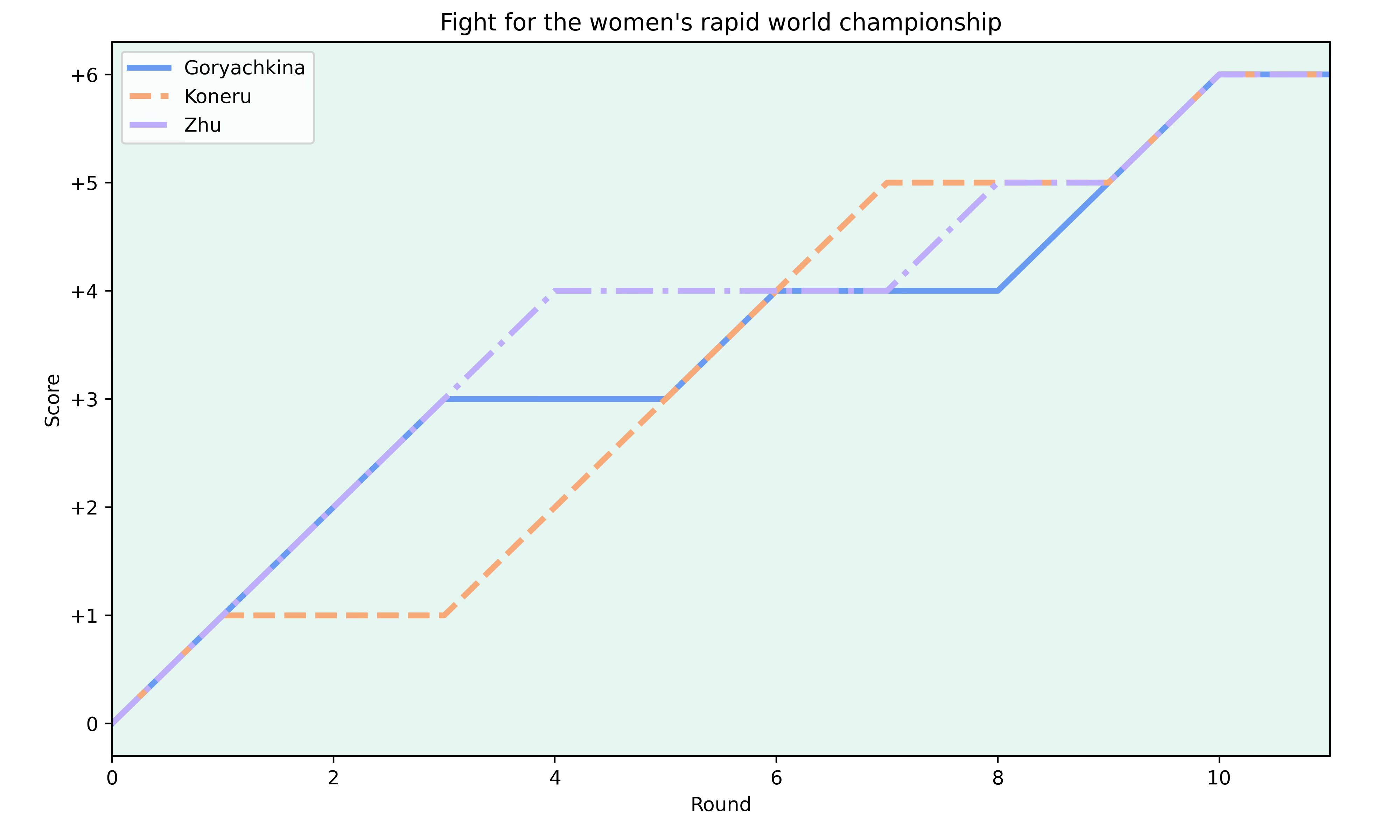
Zhu Jiner and Humpy Koneru managed to pull half a point ahead of their rivals for a few rounds, but in the end the players all ended on the same number of points. However, the playoff for the title was only played between Goryachkina and Zhu due to the rules for the event.
Looking at the expected score after each move of the tiebreak games shows that the mini match went well for Goryachkina.
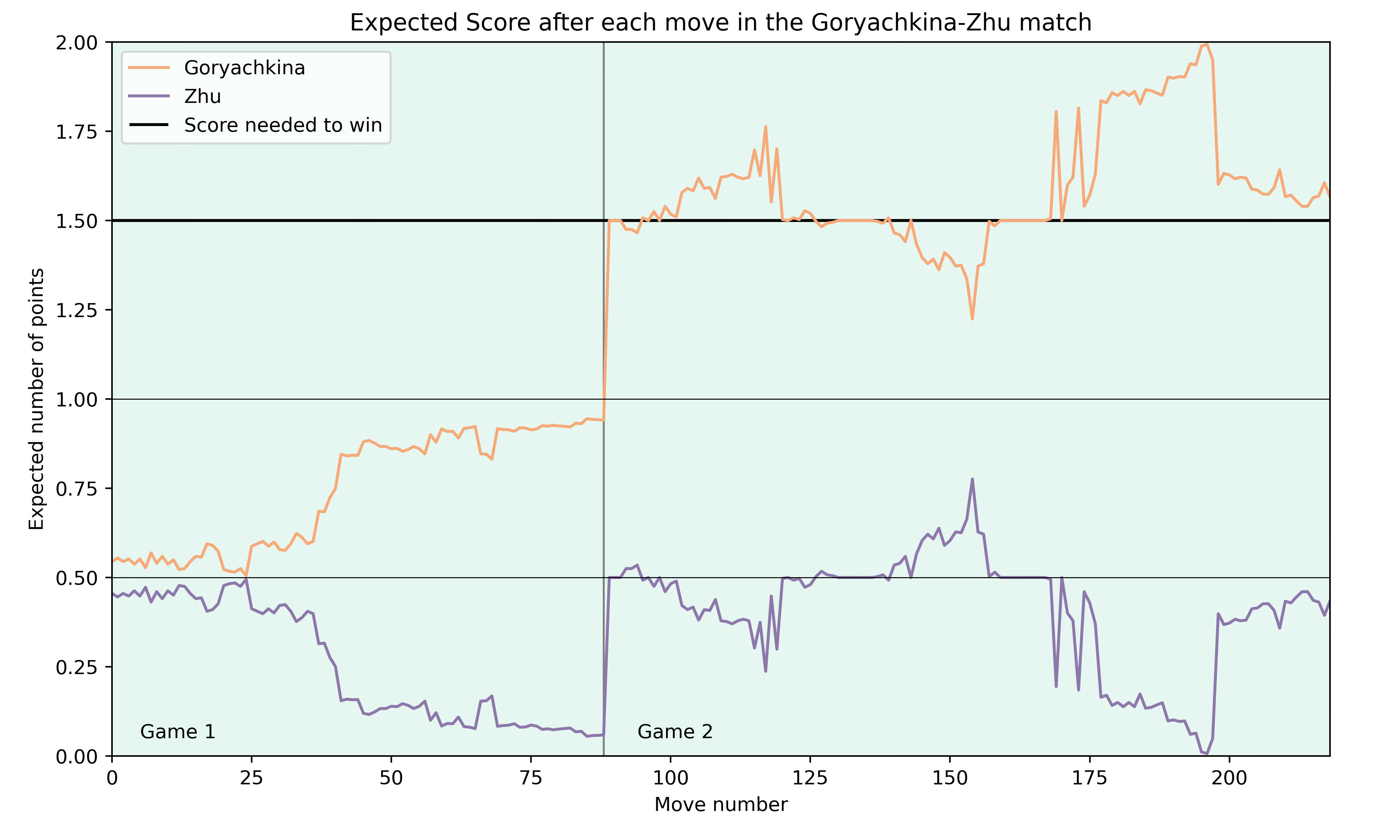
Goryachkina won the first games without any adventures and was better during most of the second game.
Better and worse games
Now I want to go through the same plots as I did for the open section.
For the women’s section, I decided to focus on the players who scores 8 and 8.5 points in the 11 rapid games.
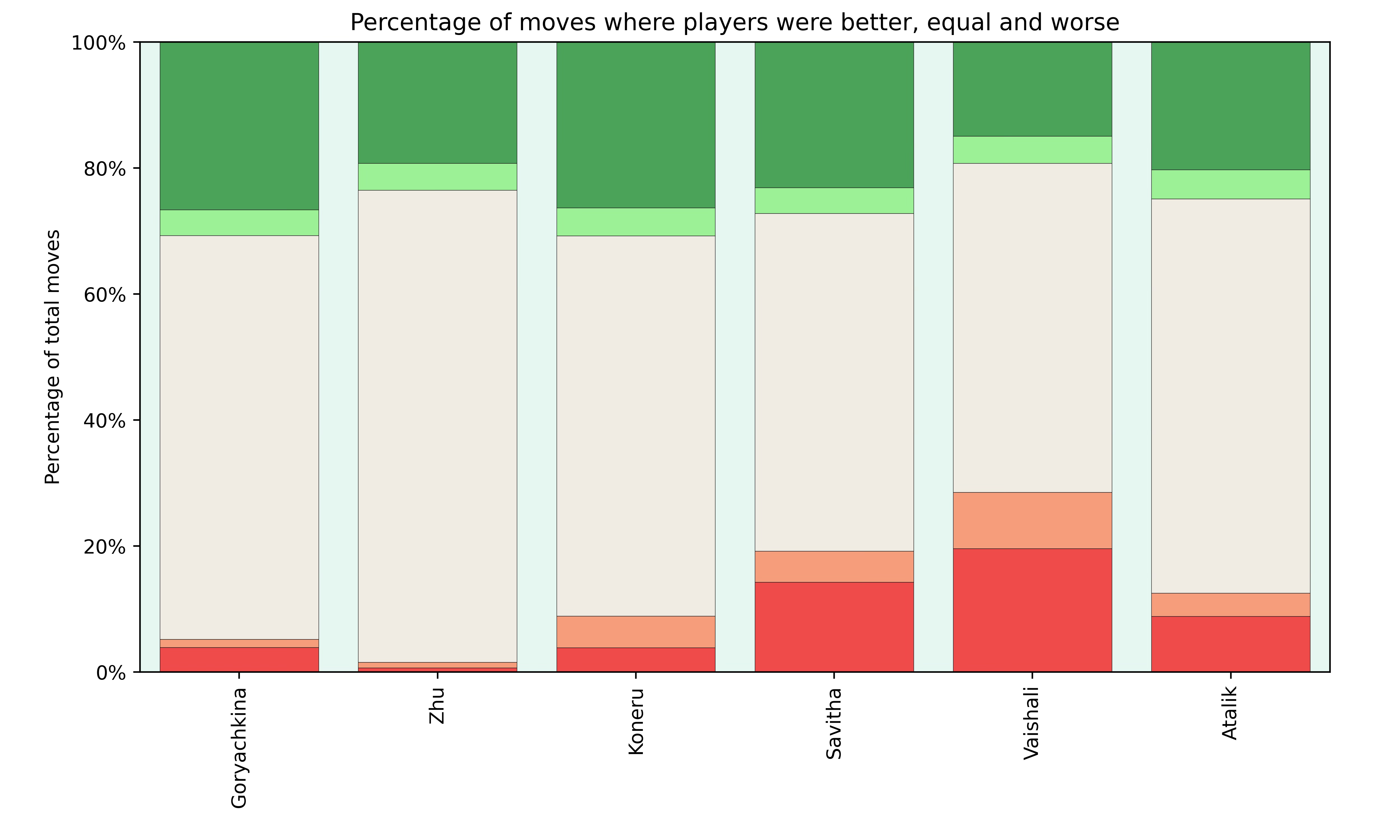
It looks like Zhu Jiner took less risk in her rapid games compared to the other top finishers, which lead to less worse positions but also less games where she was better.
In this plot, Vishali’s tournament looks bad compared to the other players, but this could be due to the nature of the games. Some of her losses were long endgames, whereas she won some games tactically where her opponent resigned quickly.
Looking at the number of better games compared to the wins is again interesting.
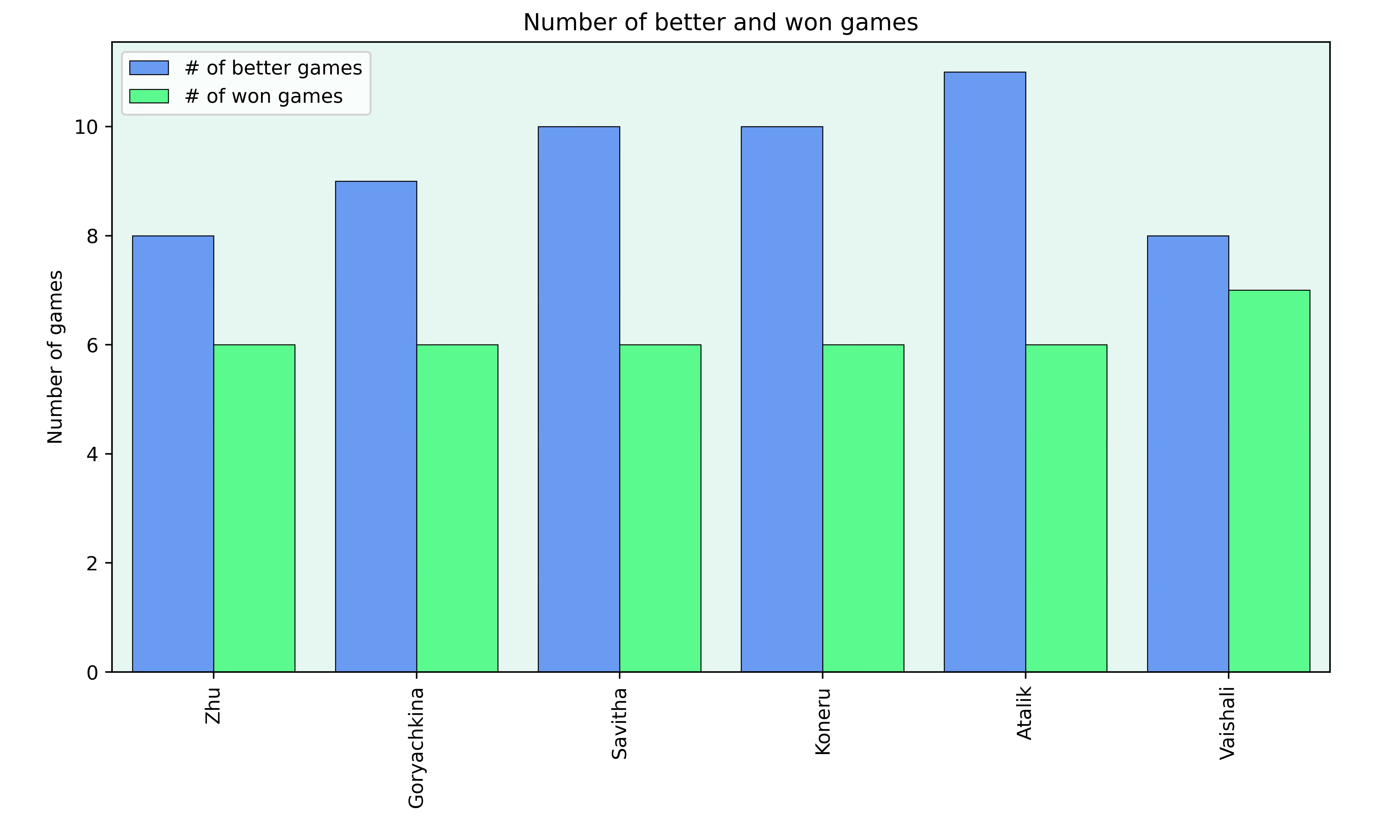
Vaishali had the most wins out of the players I looked at, but actually had the least games where she was better, which speaks to her efficiency in the tournament. Amazingly, Atalik was better in all 11 games she played, but “only” managed to convert 6 of them.
One gets the feeling that Atalik played a lot of wild games when also looking at the number of worse games.
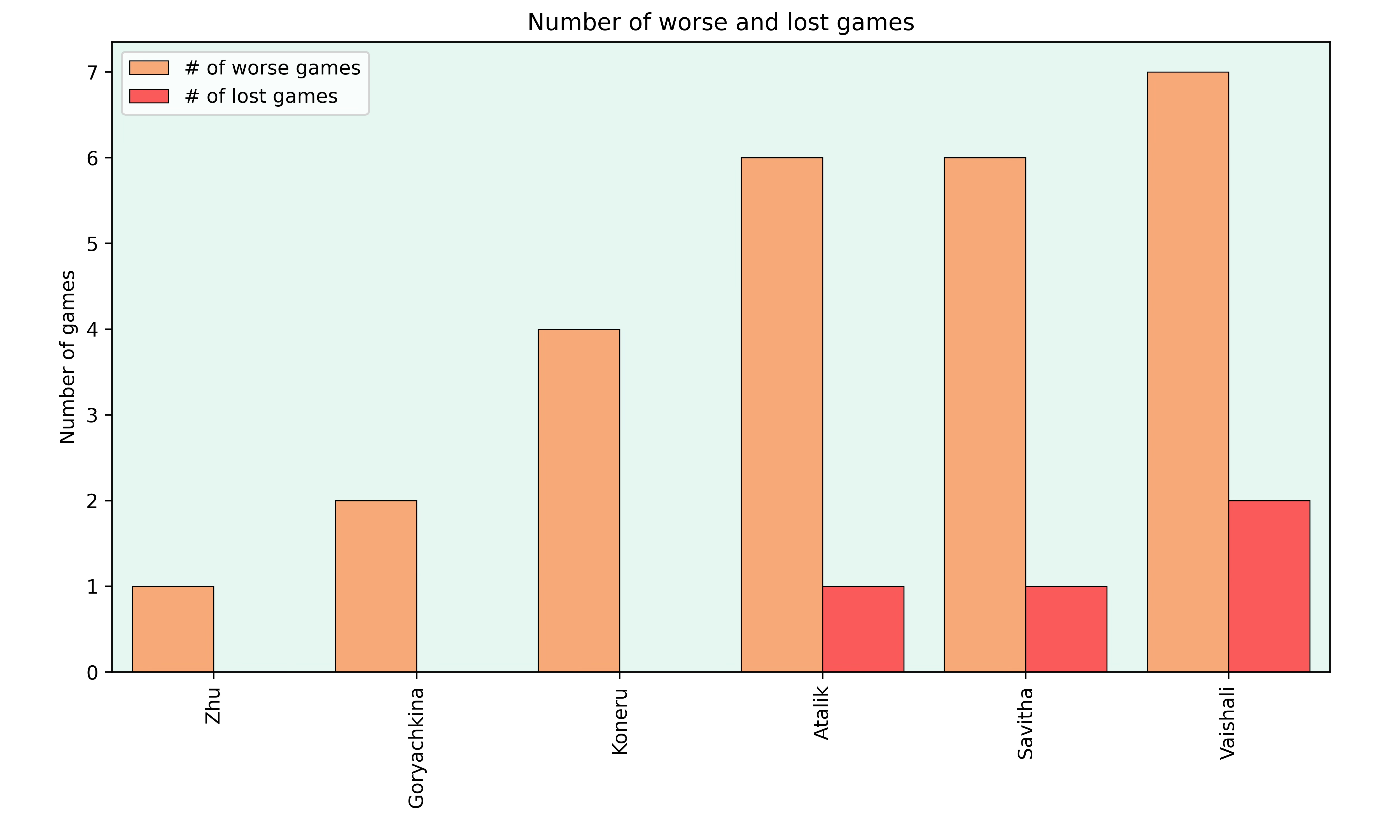
In addition to being better in every game, Atalik was worse in over half her games. Zhu and Goryachkina managed to mostly avoid trouble in their games, while the other top finishers saved at least 4 worse games over the course of the tournament.
Engine analysis
The engine analysis continues some trends I’ve already talked about.
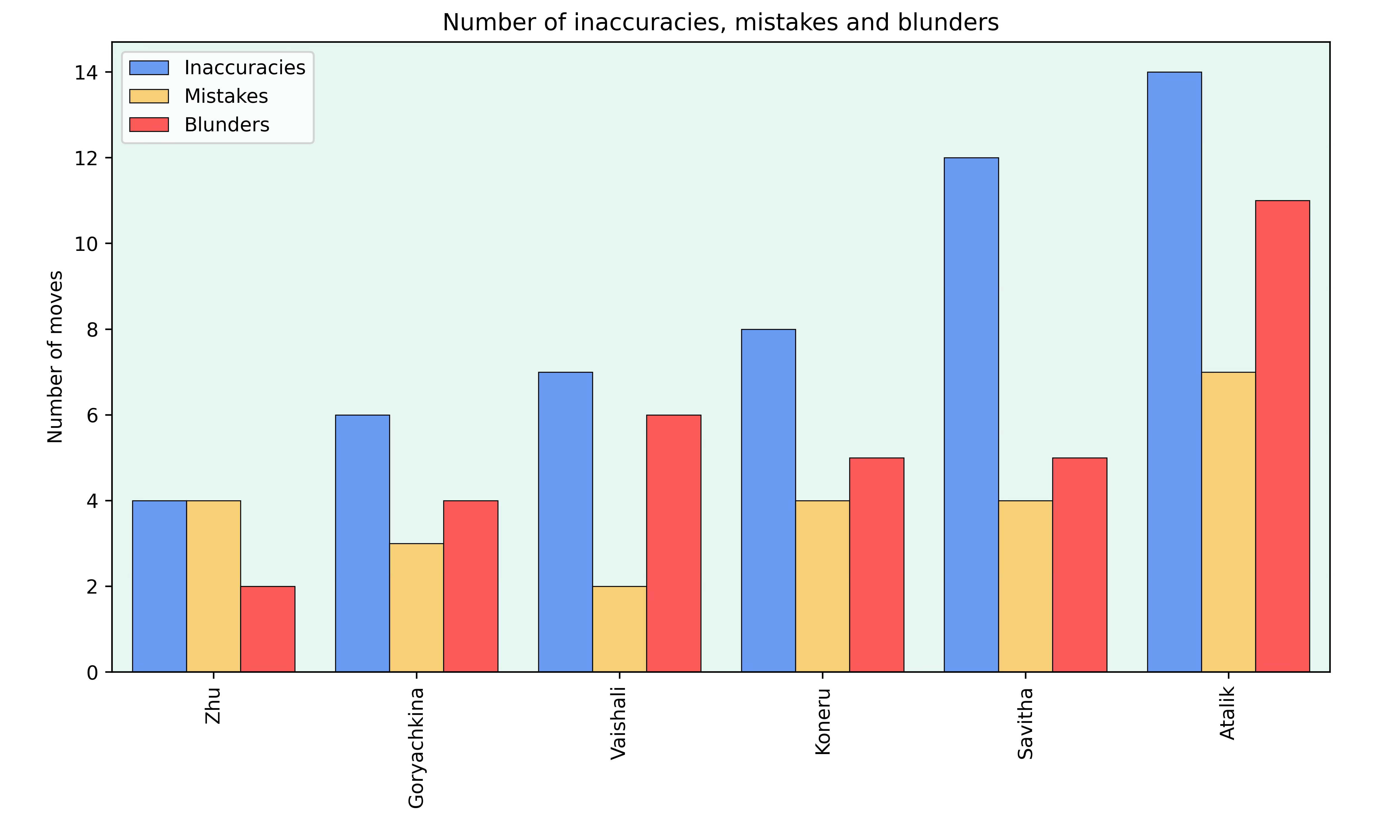
Unsurprisingly, Atalik had the most inaccuracies, mistakes and blunders, while Zhu and Goryachkina made few mistakes. And this trend continues when looking at the game accuracies.
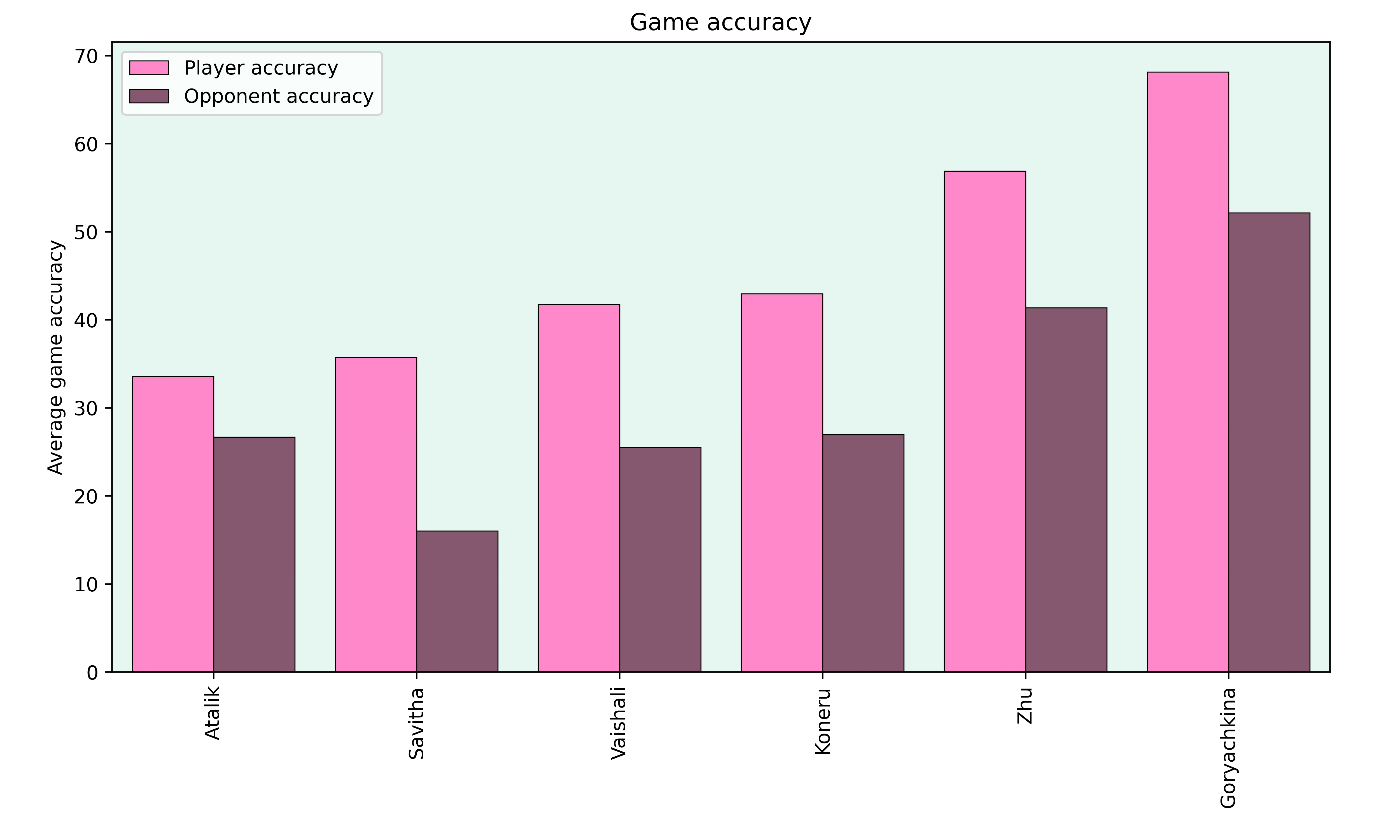
Interestingly, Goryachkina played a bit more accurately than Zhu over the course of the tournament. But her opponent’s were also more accurate, which may mean that she had some quieter games than the Chinese player.
This is wonderful data. Thanks for sharing it. Fantastic visuals.